CCDHT - Concept Character Designer - Oriental

Using "SeekArtMega" model as a base because it's already fine tuned, more generic and less biased than other models, they also fixed many missing artists: https://civitai.com/models/1315/seekart-mega

As the papers mentions "100 steps should be fine for subjects, otherwise 300 for styles" : https://arxiv.org/pdf/2208.12242.pdf

Increased to 5 simultaneous training images ( batch size ) and then increased the amount of evaluations per image 5 ( gradient steps ), decreasing the amount of training time and a chance of increasing coherence ( more images more patterns )

Some say to multiply your learning rate by ( Gradient steps * Batch size ), however, I never achieved good results, thus, I usually do ( "0.000001" * batch size ) and go even further with polynomial decaying curve: https://huggingface.co/blog/dreambooth

A sanity check should output an image that I could confirm that's a jester with rainbow hair and uses the artsyle of any artist completely different from training images! (deviation means "overfiting" )

The seek Art Mega model is capable of generating this jester using Arthur Rackham's style, and I should keep an eye if the training deviates too much from that image

From all of these settings one of the most important is the "AdamW Weight Decay" which means "how much the model may deviate from training images", and that's REALLY important for artstyles, we want features not subjects!!!

Set the folder containing the images and the regularization images...

I used these packs of regularization images to nearly cover all of the "subjects" around "costume design" and "character design": https://huggingface.co/datasets/ProGamerGov/StableDiffusion-v1-5-Regularization-Images

However .... using the generated text to image regularization images isn't a "great" idea, it's just going to reinforce the "weakness" of the AI ( like anatomy coherence, and other pretty weird features )....

Thus, the best alternative is scrapping all over the internet for "reference poses"...

Purchasing images with characters wearing different outfits, genders, body shapes, scenarios, collor schemes and camera angles, is aways better than using repeating patterns ( Don't forget to check their licensing, because regularization = training )

You will probably find many sites that will provide these packs, however, AVOID AI GENERATED CONTENT ( unless someone PERFECTLY fixed and post processed every single image )

Balance your regularization images with 50% of the images with artwork instead of only photos, otherwise you will only endup with a
photorealistic model impossible to blend with artstyles

Stylization is not a problem, aim for good negative space clear and readable silhouette tangents and dynamic poses with not much distortion or scenes with not much "lens distorion" that could affect a realistic anatomy

You could also use clip front from LAION dataset to also scrap something, however...

Even if you try to use any scrapper service or "inhouse" script, most of the sites are already "protected" enough to block your "image minning" ( limiting the simultaneous image download or maximum amount of displayed URLs to scrap the images )

Even if some find useless the image captions, they really allowed for better flexibility of the model, and, as you may notice, I've also biased the training towards "sci-fi fantasy"

And according to the papers I set the regularization images per instance images equals to the amount of epochs they are going to loop through: https://huggingface.co/docs/diffusers/training/dreambooth#training-with-a-priorpreserving-loss

The training dataset contains a complete composition image with many characters facing the camera, surrounded by scene elements in front of them and behind them as well ( a 4k to 8k image for later cropping )

Also contains an image with another composition, however, with every character looking away of the camera

Then, these images outputs something around 5 crops of the best head close-ups with shoulders, crops of the hands and the feet ( trying to capture all fashion detail available )

Usually images from characters facing the camera outputs something around 10 images, because of the details of the shoulder pads, chest, jewelry, and equipment hanging on the waist

The other type of image is the "character turnaround" or "reference sheet" wih a full body portrait of the character standing in front of a solid color background almost in "T-pose"

Once you have already used 3 character silhouettes standing next to each other on a previous image, do not repeat the same pattern, and try to add another character turnaround with a different layout and different number of silhouettes

The only type of image that should probably "repeat" is the full body portrait to reinforce the pattern and usually end up with swapable models already centered and aligned for future prompts

Most importantly for costume design, we want to teach stable diffusion that "fashion elements" and "actors" should be interchangable, thus, provide different actors with different proportions, races and colors

Extract more crops from ALL of the previous images, reinforcing atention to heads, hands, feet and waist or wherever you see a bunch of overlapping layers of details

Take a big picture of your training dataset, blur them and ignore the details, try to perceive color patterns and your most proeminent colors...
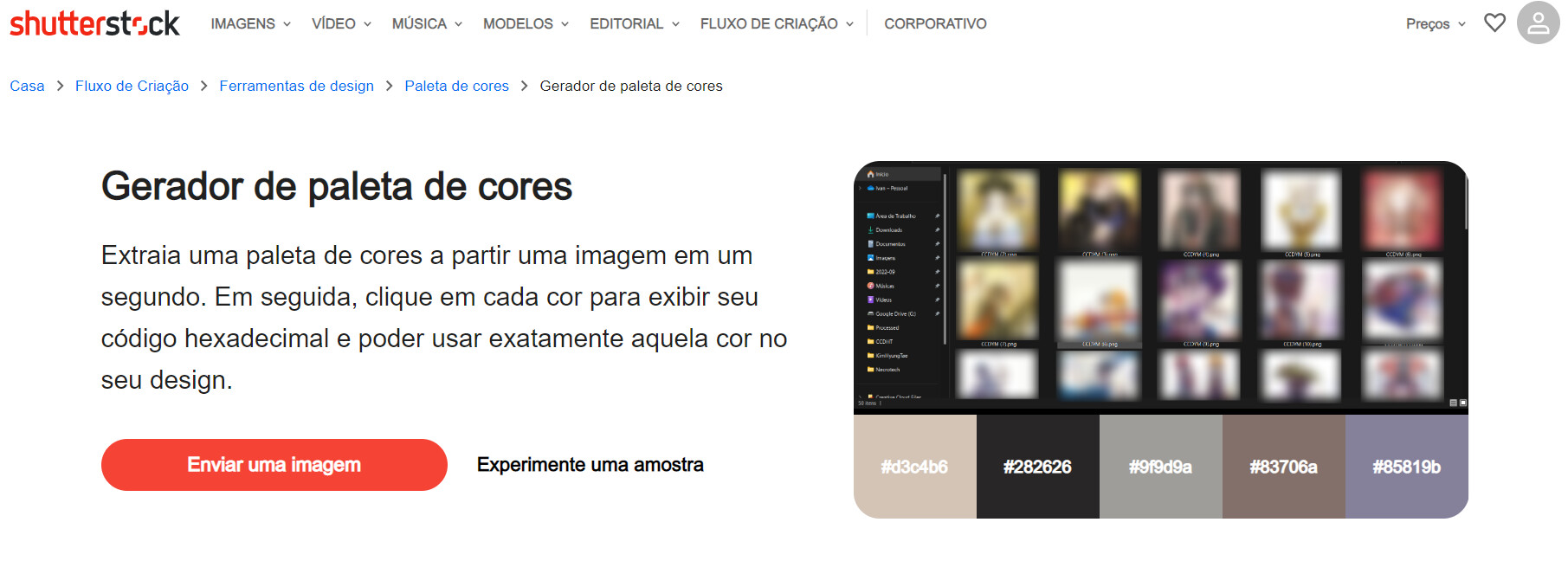
Try as much as possible to avoid color patterns, because they will reflect in your final trained model ( used shutterstock tool for extraction: https://www.shutterstock.com/pt/colors/color-palette-generator )

When doing crops avoid centered images, I've noticed lower "tilings / motifs" with more dynamic poses and compositions with multiple characters in front of each other, without doing that I hardly achieved more than a single character!

Also, I did the same for half of the full body portraits because when "fliped" they would end up with different pixel positions ( yeah, the other half of the training images, ARE EXACTLY the same 50 training images, however, fliped from left to right )

In the early models I've also noticed a lot of compositions cropping the characters, and then, I changed my way of cropping to "offset" the crop and get most of the negative space around the silhouette

And reinforced that within the class images prompting parameters ( NOT INSIDE THE IMAGE CAPTION FILE )

To generate the image caption files, I've used the image tager extension at a threshold of 0,25 ( partially )

Blip SUCKS, thus, I manually go through every image trying to put a very detailed description ( the oposite when training faces and objects that should ALWAYS be similar to the training images, artstyles are not "interpolations" of elements)

These parameters are just used to "concatenate" the words while building prompts for training, and I achieved better outputs "spreading" the token within the caption file instead of only "appending" it as the default behavior

Your models will soon "explode" and overfit, outputing these ugly noisy silhouettes that are nearly 70% equivalent to your training images, HOWEVER, you can choose to restart the training from a good backup before overfiting ( an "underfit" model )

OR choose a backup that's already overfit, HOWEVER, still trying to match part of your prompt ( I asked for a rainbow hair and looks like it's trying to output that ) and then, fix through multiple merges with the base model used for training!

With a setup like this one we are trying to "restore" 15% of the lost weights of the base model due to overfiting

4 samples after 15%

4 samples with 30%

4 samples with 45%

4 samples with 60%

4 samples with 75%

4 samples with 90%

How would the default stable diffusion model (1.5) would perform such task: "Full body portrait of an african female jester with vibrant multicolored rainbow hair in CCD artstyle ( by Arthur rackham )"

How seek art mega ( the base model would perform without any merge )

To measure the "damage" caused by the training, the first thing I'm aiming to "save" is the artstyle of distinct artists comparing side by side with the same prompt extracted from SeekArtMega ( the original model used as a base for training )

30% is a good starting point and to evaluate the "damage" caused to artists at 30%, I did the same prompt: ( Full body ) portrait of an african female jester with vibrant multicolored rainbow hair ( by ARTIST NAME )

"Damage" caused to artists at 45% of "reconstruction"

"Damage" caused to artists at 60% of "reconstruction"

"Damage" caused to artists at 75% of "reconstruction"

"Damage" caused to artists at 90% of "reconstruction", anything above that degree of merging the data is equivalent to the outputs of the base model!

I usually pick between the model with 60% to 75% of reconstruction, input that as the base model into dreambooth and start a new training with the same training images, repeating the whole thing up to 3 or 4 times...

After many "stacked" merges and dreambooth trainings, trying to preserve the artstyles as much as possible and always merging back with the origiinal seek art mega model to avoid snow balls growing along the way, you probably end up with a good model!

you should always keep a backup of every "loop" to avoid wrong choices along the path ...

And if something doesn't look great, stop fixing and return to your previous "successfuly" created model...

most of the time your models will probably create their unique artstyle instead of converging towards the artstyle you are aiming for...

And then... when you think that you started to "walk in circles"...

just choose the best checkpoint and stop wasting your time ...

That's the "flat bias" of the final model towards the training data, these images were created using the following prompt : " Full body portrait of a xxxx character in CCDHT artstyle" ( replacing the xxxx by the lables on the image above )

Flat bias towards fantasy

Flat Bias towards sci-fi

All of the following images are generated with the same parameters and same prompt : "Full body portrait of a female character in CCDHT artstyle ( by ARTIST NAME )".
The sample above is outputing the behavior of artist Aaron Miller over the token CCDHT!

Aaron Horkey

Abigail Larson

Adam Hughes

Adi Granov

Adonna Khare

Adrian Ghenie

Adrian Ghenie

Aetra Cortright

Agnes Cecile

Aion Online MMORPG

Akihiko Yoshida

Akihiko Yoshida

Akira Toriyama

Alan Lee

Alberto Seveso

Alberto Seveso

Alejandro Burdisio

Alejandro Jodorowsky

Aleksi Briclot

Alena Aenami

Alexander Jansson

Alex Maleev

Alex Ross

Alex Russell Flint

Alphonse Mucha

Amandine Van Ray

Anders Zorn

Andreas Franke

Andreas Rocha

Andre Kohn

Andrew Atroshenko

Andrew Robinson

Andrew Wyeth

Android Jones

Anna Bocek

Anna Dittmann

Anne Bachelier

Annie Leibovitz

Annie Swynnerton

Anton Fadeev

Anton Fadeev

Antonio J. Manzanedo

Apollinary Vasnetsov

Art Frahm

Artgerm

Arthur Adams

Arthur Rackham

Artist Lee KyungJin

Artur Bordalo

Ashley Wood

Ashley Wood

Atelier Olschinsky

Ayami Kojima

Barry Windsor Smith

Bastien Lecouffe-Deharme

Bayard Wu

Bayonetta Game

Ben Nicholas

Bill Sienkiewicz

Black Desert Online Mmorpg

Blade And Soul MMORPG

Brad Rigney

Brian K. Vaughan

Brian Froud

Brian Kesinger

Brian M. Viveros

Brian Mash burn

Brian Stelfreeze

Carl Larsson

Carlos Schwabe

Carne Griffiths

Carne Griffiths

Casey Weldon

Catherine Hyde

Catrin Welz-Stein

Cedric Peyravernay

Charles Vess

Charlie Bowater

Chie Yoshii

Chris Rallis

Chris Cold

Chris Saunders

Cliff Chiang

Craig Davison

Craig Mullins

Cyril Roland

Daniel F Gerhartz

Daniel Merriam

Dan Mumford

Dan Mumford

Darek Zabrocki

Dariusz Zawadzki

Darkest Dungeon Game

Dave Dorman

David Finch

David Mack

Dean Cornwell

Dean Ellis

Denis Villeneuve

Diablo Game

Diego Dayer

Donato Giancola

Doug Chiang

Dragon Nest Mmorpg

Dustin Nguyen

DustinNguyen

Dylan Cole

Eddie Mendoza

Edgar Degas

Edmund Dulac

Edward Hopper

Elenore Plaisted Abbott

Ellen Jewett

Ephraim Moses Lilien

Erak Note

Eric Wallis

Erin Hanson

Esao Andrews

Ethan Van Sciver

Faith 47

Farel Dalrymple

Ferdinand Knab

Ferdinand Knab

Fernand Toussaint

Filip Hodas

Final Fantasy Game

Finnian Macmanus

Francis Bacon

Francis CoatesJones

Frank Frazetta

Franklin Booth

Frank Xavier Leyendecker

Gabriel Ferrie

Gaston Bussiere

Gediminas Pranckevicius

Genshin Impact

Geof Darrow

George B. Bridgman

Gerald Brom

Gerhard Richter

Gil Elvgren

Gil Elvgren

Giuseppe Arcimboldo

Glenn Fabry

Greg And Tim Hildebrandt

Greg Rutkowski

Greg Simkins

Greg Staples

Greg Tocchini

Guido Crepax

Guild Wars Mmorpg

Gustaf Tenggren

Gustave Dore

Gustave Moreau

Guy Denning

Hajime Sorayama

Hans Ruedi Giger

Heinrich Kley

Heinrich Lefler

Helene Knoop

Henry Asencio

Henry Raleigh

Hikari Shimoda

Hirohiko Araki

Hiroshi Yoshida

Hope Gangloff

Howard Chandler Christy

Howard Pyle

Hubert Robert

Hugh Ferriss

Hyung Tae Kim

Iain Faulkner

Ian McQue

Ian Miller

Ida Rentoul Outhwaite

Igor Kieryluk

Igor Kieryluk

Igor Zenin

Ilya Kuvshinov

Ilya Repin

Inio Asano

Iryna Yermolova

Isaac Levitan

Ismail Inceoglu

Ivan Aivazovsky

Ivan Bilibin

J.C. Leyendecker

Jaime Jones

Jake Parker

Jakub Rebelka

Jakub Rozalski

Jama Jurabaev

James Gurney

James C. Christensen

James Gilleard

James Gilleard

James Gillray

James Jean

James Paick

James Stokoe

James Tissot

James Warhola

Jarosław Jasnikowski

Jasmine Becket-Griffith

Jason A. Engle

Jason Edmiston

Jean-Baptiste Monge

Jean Delville

Jean-François Millet

Jean Giraud Mœbius

Jean-Honoré Fragonard

Jeff Easley

Jeff Legg

Jeffrey Catherine Jones

Jeff Simpson

Jef Wu

Jenny Saville

Jenny Saville

Jeremy Geddes

Jeremy Lipking

Jeremy Mann

Jerzy Duda-Gracz

Jesper Ejsing

Jessica Rossier

Jessie Willcox Smith

Jim Burns

Jim Lee

Jim Mahfood

Jimmy Lawlor

Jimmy Nelson

Jim Steranko

Jim Warren

Joao Ruas

Joaquin Sorolla Rhads Leyendecker

Joe Fenton

Joe Fenton

Joe Jusko

Joel Meyerowitz

Joe Madureira

John Anster Fitzgerald

John Atkinson Grimshaw

John Bauer

John Berkey

John Blanche

John Cassaday

John FrenchSloan

John Howe

John Kenn Mortensen

John Salminen

John Totleben

John William Waterhouse

Jon Foster

Jon Klassen

Jordan Grimmer

Jorge Jacinto

Josan Gonzalez

Joseph Lorusso

Joseph Mallord William Turner

Joshua Middleton

Juan Gimenez

Juan Pablo Roldan

Jules Bastien-Lepage

Julian Calle

Julian Calle

Julie Bell

Julie Mehretu

Julien Delval

Jung Park

Junji Ito

Justin Gerard

Kaethe Butcher

KaetheButcher

Kaja Foglio

Kandinsky

Kanzan Shimomura

Karel Thole

Karol Bak

Kate Greenaway

Katsuhiro Otomo

Katsuya Terada

Kay Nielsen

Keith Parkinson

Keith Parkinson

Kelly Freas

Kelly Mckernan

Ken Kelly

KenKelly

Raw_KenKelly

Ken Sugimori

Kieron Gillen

Kieron Gillen

Kieron Gillen

Kilian Eng

Kim Jung Gi

Kim Jung Gi

Kim Keever

Klaus Wittmann

Klaus Wittmann

Klaus Wittmann

Klaus Wittmann

Klaus Wittmann

Klaus Wittmann

Klaus Wittmann

Kogan Gengei

Koneko Toujou

Konstantin Korovin

Koson Ohara

Krenz Cushart

Kris Kuksi

Kurzgesagt

Kwon Yun Jeong

Lady Pink

Larry Elmore

Larry Sultan

Laura Muntz Lyall

Laurie Greasley

Legend Of Mana Game

Leiji Matsumoto

Leonid Afremov

Les Edwards

Line Age MMORPG

Loish Norman Rockwell

Loish Norman Rockwell

Lois Van Baarle

Luis Royo

Makoto Shinkai

Marc Simonetti

Mario Sanchez Nevado

Martine Johanna

Masamune Shirow

Michal Mraz

Miho Hirano

Mike Mignola

Minho Kim

Miyazaki Hay Takashi Murakami Oda Eiichirō

Monica Lee

Noah Bradley

Norman Rockwell

Ohara Koson

Olga Kvasha

Pascal Blanche

Peter Gric

Phantasy Star Online MMORPG

Philippe Druillet

Ragnarok Online MMORPG

Rebecca Guay

Renaud Matgen

Rhads

Roby Dwi Antono

Ross Tran

Seunghee Lee

Shepard Fairey

Shusei Nagaoka

Simon Stalenhag

Skottie Young

Sparth

Stephen Bliss

Street Fighter Game

Syd Mead

Takato Yamamoto

Terese Nielsen

The King Of Fighters Game

Thomas Kindkade

Tom Bagshaw

Tomer Hanuka

Tomokazu Matsuyama

Torchlight MMORPG

Torii Kiyomitsu

Victo Ngai

Vincent Di Fate

Virgil Finlay

Wakfu MMORPG

Warhammer Game

Warwick Goble

Wes Anderson

WLOP

World Of Warcraft MMORPG

Yoji Shinkawa

Yoshitaka Amano

Yuko Shimizu

Zdzisław Beksiński
CCDHT - Concept Character Designer - Oriental
New model released on civitai : https://civitai.com/models/7105/cocept-costume-designer
Focusing costume design and character design, with bias towards oriental games costume design.
Model generated through 4 stacked dreambooth sessions using Seek Art Mega for base model and sucessive fixes : https://civitai.com/models/1315/seekart-mega
Everything using the WEBUI from ATUOMATIC 1111 : https://github.com/AUTOMATIC1111/stable-diffusion-webui
However, using an image hosted on Runpod.io with 2 x A100 GPUs for faster iterations : https://www.runpod.io/console/gpu-cloud